

Interview with CIA Legends
Posted in News | Tagged Leadership
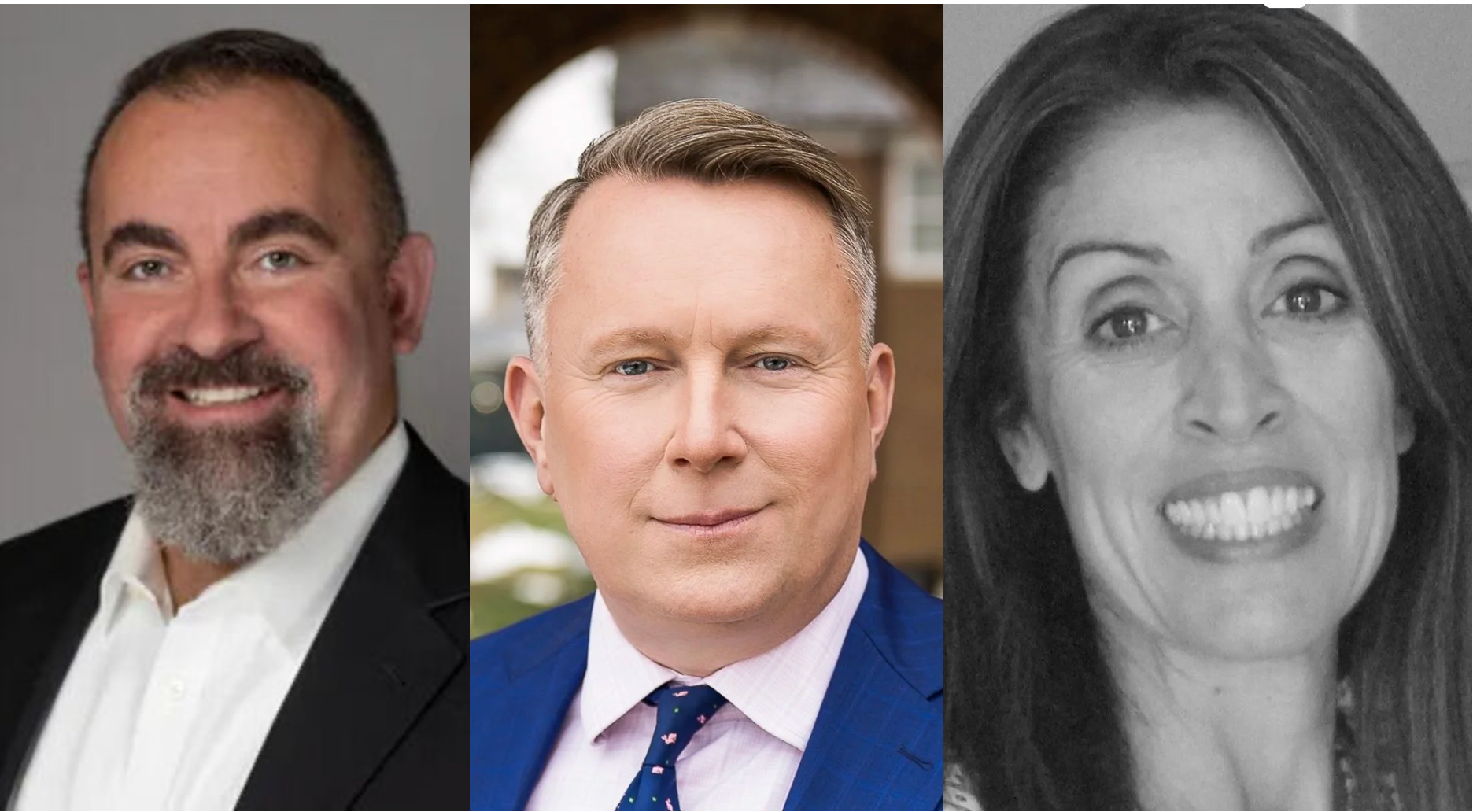
Cynthia Saddy – Former Chief Technology Officer and Chief of Staff to the Director of Operations, two-time Division Chief of Operations, leading large-scale HUMINT operations.
Marc Polymeropoulos – One of the intelligence community’s most decorated field officers and former Chief of Operations for Europe and Eurasia.
Ed Bogan – Five-time COB/COS and recipient of the Distinguished Intelligence Medal and National Intelligence Award.
A condensed transcript of PGLF Virtual Leadership Series at CIED Georgetown
Potolicchio: One thing I’d like to start with is first impressions. How are you able to forge relationships so quickly? What’s some advice that you have for us to be able to forge those connections when we don’t have much time?
Polymeropoulos: When you think about the (CIA) jobs, you have to actually enjoy people. I always thought the job of a CIA Case Officer is to be able to talk to people, sometimes even people you don’t want to talk to. You have to try to relate to them. The fundamental part of it is, first of all, you have to enjoy those interactions and be empathetic and approachable. Be a good person, a decent human being.
When you interact with someone, look them right in the eye. Make sure that person thinks that right then, they’re the most important person in the world to you. The final point is, people are interesting. You can always find something really intriguing about someone else. It took me a long time to get to this place, but one of the things that I used to love doing with employees was sitting down. If I was leading a team, I’d sit everyone down and just say: “We’re not going to talk about work, tell me about yourselves.”
People are super interesting. Just have that intellectual curiosity, and maybe, a good lesson is, don’t be a jerk.
Saddy: When meeting somebody new and trying to determine where to place them, you’re making assessments on them, so listening is important. I could be wrong, but the brain takes on about 8 million data points per second. It’s really important to allow the brain to categorize those people into various bins, but also be very careful to allow yourself to be curious. Allowing the brain to characterize folks like self confident, great speakers, feels natural, authentic. Be curious about those things, but don’t let it pigeonhole you, so you can make a better assessment of who’s in front of you.
Most importantly, as you’re trying to create that first impression, try to forge some common ground with folks, that’s what allows that relationship to continue. Then, find common things to do together. I think that applies to business as well as to our old jobs.
Bogan: The ability to be an active listener is one of the crucial points. You have to establish some rapport, you don’t want to just defer. You have to do a little bit of connecting, but also a lot of open ended questions too. Let people show and tell you who they are.
Potolicchio: I have a curiosity about the farm where you’re getting trained. I’ll read you some lyrics from “Down On The Farm,” from Guns N Roses’ majestic album, “The Spaghetti Incident”: “They told me to get healthy/ They told me to get some sun/ But boredom eats me like cancer/ Down here on the farm/ Drinkin’ lemonade shanty/ Ain’t nobody here to do me harm/ But I’m like a fish out of water/ Down here on the farm/ I wrote a thousand letters/ Till my fingers all gone numb/ But I never see no postman/ Down here on the farm/ I call my baby on the telephone/ I say come down and have some fun/ But she knows what the score is.”
Any truth to Guns N Roses’ writing about the farm? I say that facetiously, because all three of you have really unlikely stories to get to the CIA.
Bogan: It all started out growing up in New Jersey and spending a lot of time skateboarding in New York City, in my own environment, in my own head, becoming somewhat of a deep thinker. That led me to studying philosophy, which, to be quite frank, doesn’t open a lot of professional opportunities, so I was looking at next steps. Ultimately, I found my way to law school. I didn’t go with the intent of being a lawyer, I wanted to have a more dynamic degree, but being a lawyer wouldn’t have been a problem if that was what it had come down to.
I picked a university with a robust international law program, because I wanted to see the world and at least start somewhere. I studied abroad at the University of Athens – Law School in the summer of 1997 and was able to parlay that into an internship with the State Department in the summer of ‘98.
Because I had spent time in Athens, they sent me back to work at the US Embassy in Greece for the summer. While I was there, our embassies in Kenya and Tanzania were attacked by Al Qaeda with tremendous effect. It was a very defining moment for me and I said, I wanted to join the agency and pursue Al Qaeda specifically. I joined in 2000 and finished the operational certification training at The Farm in the summer of 2001. The cusp of 9/11 obviously framed my career going forward.
Saddy: I was born in Beirut, Lebanon, and, not to date myself, but mid ‘70s was when I was growing up there and the first bomb of the Civil War went off on the street where we had our apartment. At that time, my father said to my mom: “It is time to get you and the girls out of the country. When things settle down, you can come back.” We never did end up going back, things just continued to go down the tubes in Lebanon, and we became naturalized US citizens. As I was going to the University of Virginia, my father said to me: “What do you think is the best thing that you’ve done in your life? You became a US citizen, and so, moving forward, you need to think about how to repay this country.”
He has always had a foot in the intelligence world, so he pushed me to apply for the CIA. I joined and focused on the Near East for a good half of my career and on counter terrorism for another good portion of it. As I got into the senior ranks, I started looking at how our trade craft was changing based on the explosion of technology and all of the sensors in the world.
About the farm, yes, we did do our training down at the farm, but where I learned how to assess people was at the knee of my mother, growing up. That is, coming from a Lebanese background, you spend a good ten minutes after any interaction doing the whole “what do you think they meant when they did this and when they said that?” That was where I learned that part of the business.
Polymeropoulos: In terms of my origin story, my mom was a nice Jewish girl from Great Neck, Long Island. She went off to Cornell University, met my dad, who was a true Greek coming from Athens on a Fulbright scholarship at Cornell. After finishing his PhD, my dad had to go back to Greece to do his mandatory military service in his 30s. So I was born in Athens, but with a really unique background, the Greek Orthodox side and the Jewish one. Because of that mix of cultures and peoples and religions, I had a really worldly view.
Every summer we went back to the Greek islands, then I started traveling all over with my dad. When I was 10, my father did a sabbatical in Algiers, at a technical university there, and I went to visit him. My mom put me on an airplane from JFK airport to go by myself through Paris. I met him in Algiers and there’s a picture of me on a camel when I was 10 years old, in 1980, and we drove 2000 miles through the Sahara desert in a Volkswagen mini bus for a month sleeping in oases.
Then, of course, I thought I was Lawrence of Arabia, and I fell in love with the Middle East, and that was born of that wanderlust. When I was studying at Cornell, the CIA came recruiting, and I went to the recruitment center, and there was a guy in an earpiece. There were so many protests on campus at the agency, but I ended up getting a job, the only job I’ve ever had until my retirement.
Potolicchio: “Organization doesn’t really accomplish anything. Plans don’t accomplish anything either. Theories of management don’t much matter. Endeavors succeed or fail because of the people involved.” What are the qualities that you think will give us a competitive advantage, not just to be an effective operations officer, but to help us in our business and how would we hone them?
Polymeropoulos: The best thing anybody can do is to learn a language. When I say learn a language it is because when you learn a language, you learn about a culture. When you learn a culture, you learn about people’s religions, about the food, the history of the place.
As someone who was involved in the Middle East, in the counterterrorism world, I learned Arabic. I remember one time when I was very young in my career, I was meeting an agent, an asset, a very senior member of an Arab Intelligence Service who was working for us. He’s assessing me just like I was assessing him, I’m his handling officer, his life’s in my hands. I’m going to keep him alive. He’s providing information that’s going to go in the President’s daily brief, but he’s also looking at me, saying, “Who’s this young kid?”
I do this by design, things have always fascinated me, and I’ve read a lot about the differences between the Syrian and the Iraqi Ba’ath parties. The guy stopped, he said, “I’ve never heard an American take interest in this.” I actually did know about this and we had a discussion on it.
To me, that was really important, because it showed to him that I cared not only about him as an agent, but also about his culture, his people, and the history of the region and country where he came from.
It’s just that idea of immersing yourself in something. When I mentor students they say: “Should I study cyber?” I say, “Sure, but you can also study psychology, or history or be a math major, but learn a hard target, learn a foreign language, because then, that gives you this incredible understanding that there’s a bigger world out there.”
Be aware and interested in other cultures and people. If you want to expand your knowledge and also your professional expertise, if you learn a language, it’s going to be extraordinary for you, for so many reasons.
Bogan: The unbounded curiosity is crucial and there are corollaries to it: being self aware and curious about your own decision making. It’s important to have confidence in the choices that you make, but it’s probably more important to be able to dissect the actions that you take and the decisions, because so much of what we do is done in spaces where we have an incomplete understanding of the broader scenario.
We have to use our judgments and occasionally, we’re getting things wrong, and we need to be very clear with ourselves and admit what the wrongs are. The problem isn’t making mistakes but making the mistakes repeatedly. It’s a fine blend of curiosity, self awareness, and moral courage. Those three things are probably the most important sort of combination to have within yourself.
Saddy: I completely agree with the moral courage. The best advice that I got going into the organization was from a friend of mine who said to me: “Do not let the place change you.” I didn’t understand what he meant then, but over the course of my almost three decades in the organization, there was drift everywhere around us, when we were making decisions in the gray. There could be five good, acceptable answers to an issue, and you’d have to pick the best one to move forward.
You have to be able to accept the failures, risks or, God forbid, the implications or the results – the death of another officer, or of an asset. Moral courage is so important to keep your eye on the ball and continuously reassess whether what you’re doing and where the organization is going or where the leadership is going. Does that still align with your values? Because you don’t want to lose yourself, and that’s where I find that people make really big mistakes.
Seeking out other cultures, other languages, and learning about other people is so important because it makes you feel comfortable in uncomfortable situations. You have to be good being there, because there is no scenario where everything is perfect around you. You have to be able to make a clear decision at that point. That really comes down to being centered as an individual yourself, and being able to compartmentalize any emotions out of your decision making, and come at it from a place of being centered and understanding what the implications are, as well as the facts.
Potolicchio: My favorite characteristic of all three of you is that I would trust you with my three children, if something happened to me, because you live your eulogy virtues more than your CV virtues. I want to get to how you can be ethical and moral as a CIA operations officer. I’m going to read now from the book Principled Spying: “By contrast, Secret Intelligence might appear at first to be the one profession that has to be governed by a code of anti ethics, a code of behavior with few, if any, rules so as to allow activity that most people would consider unethical if applied to their everyday lives.”
If you think about CIA director Michael Hayden’s book, it was called Playing To The Edge, there is this idea that you’re getting to some sort of ethical edge line. Georgetown graduate CIA director George Tenet in the 1998 interviews said this: “Let’s be blunt about what we do. There is no dishonor in it. We steal secrets for a living. If we do not steal secrets for a living, then we ought to shut the doors and do something else for a living.”
There’s this idea that’s rooted in the ethos of a concept as old as human society. The weaker, the vulnerable, can be manipulated by the strong and the shrewd. And so the major question is, how do you have this incredible sense of morality that I pick up on? How are you all living the eulogy virtues and what was that moral engine for all three of you at CIA?
Polymeropoulos: We don’t lie, cheat and steal against Americans, we do it against our adversaries in the foreign field. When you walk into CIA headquarters, it’s a unique experience. Everyone sees from the movies the great seal on the floor, and on the right is the memorial wall. It’s the stars where our officers who were killed in the line of duty are certainly celebrated. It’s a really important place for all of us, it’s very sobering, but it doesn’t get as much attention. On the left, there’s a line from the Bible, and it says, “And you shall know the truth, and the truth shall make you free.” That’s the idea of honesty and integrity and CIA officers have that.
If you’re off in a developmental meeting trying to recruit someone, or in an agent meeting running a surveillance detection route to try to meet an agent, or paying someone several thousands of dollars, or getting information just on a one on one basis, you have to then write up what’s going to go the President, and perhaps a foreign policy decision is going to be made. You have to have this incredible sense of ethics and integrity. Most people who get let go by the CIA are let go for ethical or integrity violations, because, again, you have to have that absolute sense of doing the right thing.
Does that mean we don’t try to manipulate others to gain access to privileged information? You do that with a Russian or Chinese or an Iranian official, you don’t do it with fellow Americans. You’re not supposed to do it with your colleagues.
To me, that ethical line was pretty easy. The place where people do trip up though, because it’s human nature, is, because we have this unique job, you do have to separate what you do professionally, with what you do in your personal lives.The ethics and integrity of the agency have to be sacrosanct, because, again, you’re collecting information that’s going to contribute to big decisions that are going to affect a lot of people.
Saddy: We held American ideals and values as sacrosanct. They were generally seen, or historically seen, as things to be aspired to by other nations in the world. Having that as the backdrop and understanding that you can lie, cheat and steal outside the building, outside the walls, but not within the walls, because you’re doing it for a moral goal – to bring democracy or freedom and liberty to people – was really important.
The final thing I will say, and all three of us had to deal with this, especially in the counterterrorism war, is that there is a great role to be played by the rule of law. In terms of the private sector, whatever your criteria or your rules are going to be, you establish them, you have to live by them, and they have to apply for every single scenario, because when you’re making decisions that can be very serious, in our world, it was a life or death type of decisions, you’ve got to have something that is repeatable, a criteria and a system that you can explain later on.
I imagine in the private sector, it’s probably very similar. Your ultimate goal may be different than ours, but still very serious decisions that you’re making in terms of how they impact your shareholder.
Bogan: It’s hard to conceptualize what our work looks like overseas, and there’s a lot of structure to it. It’s certain psychological and trade craft tools that we apply to various scenarios to make an objective happen, whether it’s to bump into someone we’ve never met before, or to have a conversation with them such that we can determine if they’re worth having further conversations with, or if they’re actually working for us, how do we keep them safe? There are manipulative tools that we use to make sure that we achieve our objectives, but there’s a lot of integrity and an actual honesty to what we do.
We make sure that with colleagues we aren’t using any of those techniques. When I’m coming back into an office from an operation, the operation didn’t go well, or if the individual I thought was going to have a lot of information doesn’t turn out to have the information I was hoping for, I have to be honest, not just with myself, but with everyone else, and say: “My assessment wasn’t correct. We can take more runs at it. It might not be worth our time. Maybe, it is time to move on.” Being honest with colleagues and treating them with respect, or when we document for the record what took place, there’s an integrity piece to that as well. Everything we write lives forever, and it has to be 100% accurate and to include our assessments. Laying that out as clear as possible reinforces the integrity of the system within which we operate.
An enormous amount of our work is dealing with foreign liaison services in every country on Earth where we’re stationed. Some places have more difficult relationships than others, but having those relationships with a foreign liaison service, sharing intelligence, even with services we don’t get along with, if it’s on an issue that’s compatible for both of us, where we can learn from each other and actually help each other achieve objectives, that is an incredible part of the work and integrity.
Potolicchio: Cynthia, you might be the one person in the world with your CV, that I most want to ask this question about finding wisdom in all of the information that we have. Let me read from a book called How Spies Think.10 Lessons In Intelligence: “ We all face decisions and choices, at home, at work, at play. Today, we have less and less time to make up our minds than ever before. We are in the digital age, bombarded with contradictory, false and confusing information from more sources than ever. Information is all around us, and we feel compelled to respond at its speed, there are influential forces at play ranged against us, pushing specific messages and opinions through social media. Overwhelmed by all this information, are we less or more ignorant than in previous times?” It’s a broad question for you, but how do we deal with all this information? Can you give us some insight on how we can be more effective, both gatherers and consumers of information?
Saddy: Responding at speed, that is critical. If you think about the private sector work right now, it is all about responding at speed of how quickly information is being generated, and by that I mean open source information. With the explosion of sensors around us and the digital world, all of the devices, the data that businesses are putting out as part of their business data, they may or may not realize is actually of intelligence or even just information value. There’s so much data being generated every single day that it is incredibly important, moving forward, not just for private sector, but even for public sector, to have a strategy about how they are going to collect that data, where they’re going to store it, how they’re going to clean and organize the data, so that they can eventually take advantage at it and respond at speed. Obviously, this would include artificial intelligence and being able to find the needle in the haystack to answer the question for your business or for your problem set.
I did some work with startups immediately after I left the government. I wanted to stay at the intersection of technology and national security. The first position I took was with a startup in artificial intelligence, the second position I took was with an even earlier startup that was dealing with open source information, collecting it and making it accessible to governments, because we recognized that many governments are not positioned yet to collect, store or clean and make any sense of it at all.
The bottom line is, you’ve got to have that strategy in place. A great example is the Boston Red Sox, which took all of the business information that they were creating regarding sales during games. What they did is they were able to see over time where to shift their resources, what kiosks to close, where to shift their personnel so that they could maximize profits and reduce the costs and it has been effective. In this case, they were able to use their own business data that they were generating, in some other cases, for different problem sets. For different businesses, you might have to go out and seek out additional open source information from somewhere. Maybe it’s paid or it’s just accessible on the internet, but in any case, you have to have that strategy, to find, store, clean, and then, use the AI tool, to answer the questions at the speed of data.
Potolicchio: Ed, I noticed when we were navigating through an airport, how your head was always on a swivel, and I was trying to think what you were thinking about with your observational power. Let me read from one of my favorite spy novels, The Peacock and The Sparrow: “Worry before, and you’ll be prepared to worry afterwards, and you’ll keep your feet on the ground. Don’t worry during action, that’s fatal.” Can you tell us how you can deal with a crisis?
David McCloskey, in his book, Moscow X, said that espionage was a game, and if a spook wasn’t playing, he was either irrelevant or dead. Can you help us figure out how we can get off the X out of dangerous situations, and what’s that type of Checklist Manifesto you have in your head to be prepared for disaster, for crisis?
Bogan: If I had to simplify it, I’d say, “What do you do before a crisis and what do you do when the crisis hits?” Before the crisis, it’s all about as much preparation as you possibly can do across a range of common sense vectors. We have to make decisions with incomplete information almost always, in hope that the gaps are filled in to a large extent.
As Cynthia said earlier, very wisely, sometimes, you have to make a decision across five scenarios and you’re trying to pick the best one. Unfortunately, sometimes we’re in a scenario where there’s five choices and we’re trying to pick the least worst one, because maybe we haven’t prepared, or it’s just too unique a scenario that was thrust on us.
There’s just the type of preparation that you put in and trying to understand exactly what’s happening at all times and trusting your instincts. You have to remember when you’re making decisions in times of crisis that time matters and that you don’t self limit. These are all interrelated. The risks of inaction are often much bigger than you can possibly comprehend.
Potolicchio: Marc, I want to know what you mean in your book by “family values” and what our main extraction is from that in our leadership lives.
Polymeropoulos: I wrote a book on leadership because when I retired from the CIA, I thought I’d finally become a good leader. It was based on these experiences and lessons that I learned, the idea of getting to be comfortable in the uncomfortable and trying to figure out how that happened. One of the lessons I saw is essentially how high performance teams operate well in tough situations. In this case, I came up with this silly slogan, the idea of “family values.” It goes back to what I talked about in the beginning – taking care of your people, being interested in them, being empathetic, and the family values piece is actually caring.
For Cynthia’s first assignment in the Middle East, I went along with her, and I learned Arabic there. We had a boss who, in theory, had an open door policy, but he really didn’t. He was a former Marine, and it was rather terrifying. That’s not the way to, frankly, manage a team or the kind of environment you want to foster.
Family values means fostering an inclusive environment in which you are good to people. A team is going to be much more resilient if they believe and rely on each other. When I was a base chief in Afghanistan, many moons ago, I was often in eastern Afghanistan, on the border with Pakistan, 7000 miles away, in the middle of nowhere. My mom passed away in New Jersey and I had to get back. It took me multiple helicopter flights and fixed wing flights, but I eventually made it back. But I remember, the base where I was at had this mountain pass, and it was always fogged in. We took off in one of our helicopters with our top pilots, and we’re so soaked in by the weather, it’s clouded everywhere. I told them, “Hey, turn around! This isn’t worth the risk!” We didn’t. We got to another base, and I remember jumping out of the helicopter, I went to the pilots, and I said, “We didn’t have to do that.” They looked at me and said, “Chief, your mom passed away. We were getting you home. That was our mission!” I teared up. I didn’t know these people very well, but that was the kind of loyalty that we had to each other.
You don’t have to love the people, but they have to be able to rely on you. That will get you through tough times in the end. These are lessons that aren’t rocket science, they just make sense.